
Biophilic Design in Caribbean Healthcare Facilities
Hospitals and clinics traditionally feel sterile, but biophilic design – integrating nature (light, air, plants, water) into architecture – can transform healing environments. Research shows that patients in rooms with natural views recover faster, use fewer painkillers, and report less stress. A 1984 landmark study by Ulrich found surgical patients with a window to green scenery had shorter stays and needed less medication than those facing a wall. A recent systematic review (2024) similarly found biophilic hospitals reduce patient stress and mortality, lessen pain, and speed recovery. These effects arise because natural light, fresh air and greenery positively influence mood, anxiety and physiological healing.
- Healing gardens and views: Biophilic hospitals often include gardens, courtyards or large windows. For example, Curaçao’s new Curaçao Medical Center is adding a “Healing Garden” and children’s play area so patients and families can relax amid plants and play during long stays. Similarly, interior plants, water features and artwork of nature scenes can reduce anxiety for patients and staff.
- Patient outcomes: Studies link biophilia to real health gains – lower blood pressure, reduced pain perception, better sleep and quicker functional recovery. For caregivers too, improved air quality and daylight reduce fatigue and errors, boosting staff well-being. In sum, “therapeutic landscapes” in hospitals promote a faster, calmer healing process for all users.
Biophilic Design in Caribbean Wellness Tourism
The Caribbean’s lush nature is a major draw for wellness travelers. Resorts and retreats now explicitly use biophilic principles to enhance guest well-being. For instance, Secret Bay in Dominica (nicknamed “the Nature Island”) recently unveiled new amenities inspired by biophilic design. An aerial view below illustrates how Secret Bay’s pool and deck are nestled directly between rainforest and sea:
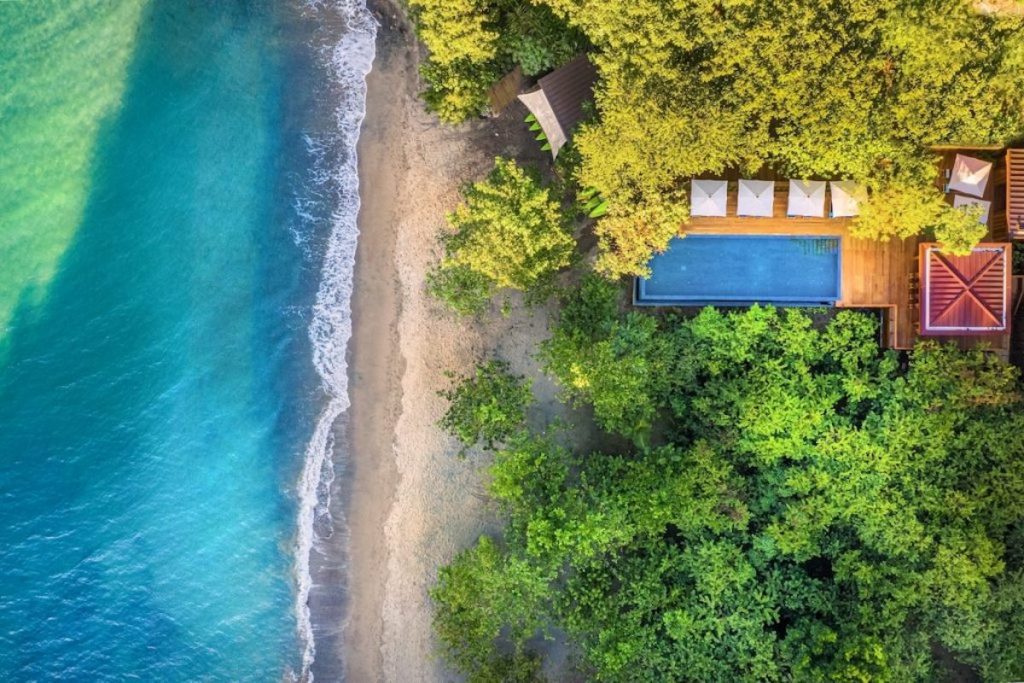
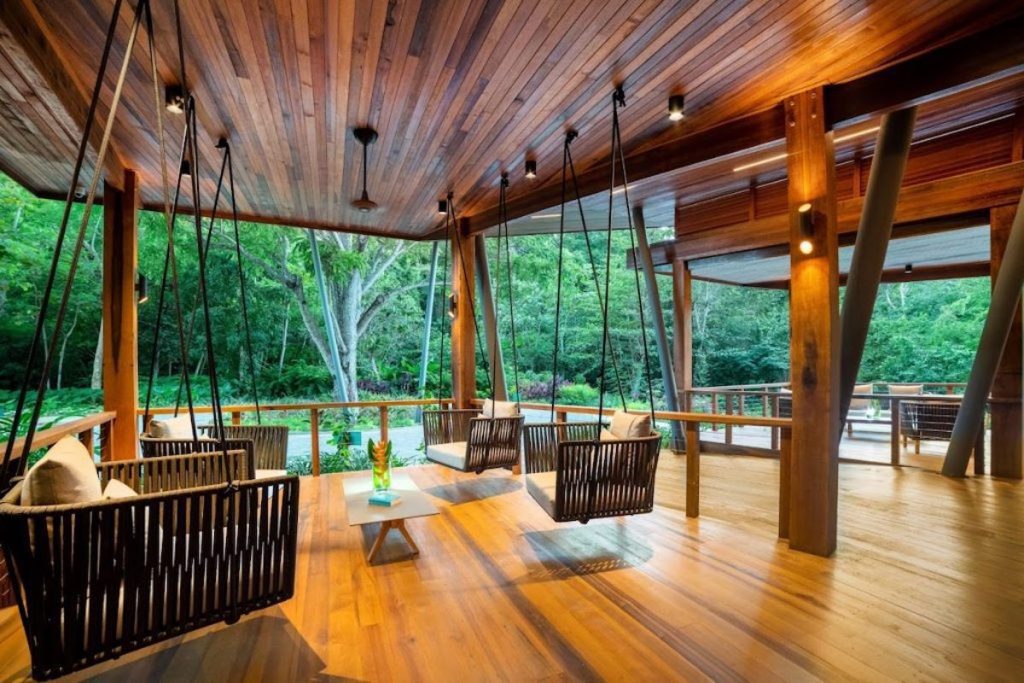
Secret Bay’s new Gwiyavye’ Pool & Bar is an “elevated oasis” with an in-nature lap pool set amid lush rainforest, plus a deck of Guyanese hardwood made to frame sea views and jungle greenery. Likewise, the Mouben Welcome House (lobby) uses natural wood and open-air structure to feel like part of the jungle. These features are not mere decoration – guests report that exposure to living trees, ocean sounds and daylight helps them relax deeply.
- Resort case studies: Many Caribbean resorts now market themselves as biophilic sanctuaries. Jamaica’s Half Moon resort explicitly calls itself “a biophilic sanctuary” built on 400 acres of forest, beachfront and gardens. Villas and restaurants have large windows framing palm-fringed beaches, and open-air verandas to capture trade winds (see image below). In Barbados, Seastar House (a luxury rental villa) was designed by Peter Inston to dissolve boundaries between indoors and outdoors, with floor-to-ceiling glazing and louvered screens that harvest breezes.
- Wellness experiences: Spas, yoga pavilions and hiking at these properties often take place in natural settings. Guests at biophilic retreats report greater mental well-being and stress relief simply by being immersed in these environments. This dovetails with the rise in wellness tourism: globally, travelers spent over $800 billion on wellness trips in recent years, and the Caribbean is capturing a slice of this by promoting nature-based spa and fitness programs.
Common Design Elements of Tropical Biophilia
Caribbean biophilic architecture adapts to the warm, humid climate by explicitly embracing nature:
- Natural light & views: Buildings have large operable windows or sliding walls to admit daylight and frame views of sea, sky or jungle. This “prospect” feeling (long views) gives relaxation and a sense of openness.
- Airflow & cooling: Designs favor cross-ventilation – louvered windows, open facades or double-skin walls allow cool trade winds to flow through rooms. Often the structure is shaded by extended roofs or large wooden pergolas (like the “WonderFrame” shade on a Colombian university) to block harsh sun while letting in dappled light.
- Vegetation & water: Indoor and outdoor gardens abound. Vertical green walls, potted plants and native landscaping (palms, ferns, flowering shrubs) are integrated on terraces, courtyards and roofs for cooling and beauty. Pools and fountains are placed to mirror natural water (e.g. an infinity pool blending with the sea). The Seastar House uses a tropical courtyard and edible fruit trees so residents see, smell and taste the landscape.
- Natural materials: Locally sourced woods, coral stone, and clay tiles are used for floors, ceilings and furniture. These materials add texture, regulate humidity, and visually tie the buildings to their island context.
- Organic forms: Even indirect biophilic motifs appear – from shell and coral patterns in decor to soft, curving rooflines that echo waves. Biophilic design often includes fractal or patterned details (e.g. trellis shadows or woven rattan) that subconsciously connect occupants to nature.
Together, these elements create “breathing” buildings that feel like part of the landscape.
Health and Economic Impacts
Health outcomes: Ample data link biophilic design with quantifiable health gains. Besides Ulrich’s classic findings, many studies confirm that views of nature and access to greenery reduce stress hormones and speed healing. For example, patients with indoor plants or garden exposure report lower blood pressure, less pain and fewer depressive symptoms. In real terms, this means hospitals with biophilic features can see quicker discharges and lower complication rates. In resorts, guests often report improved sleep, mood and recovery from illness after stays in nature-rich settings.
Wellness tourism economy: The Caribbean tourism sector is huge – accounting for roughly 15–30% of GDP in many islands. Wellness tourism is a fast-growing slice of this market. Globally, Latin America/Caribbean wellness travel was ~$35 billion in 2017, and that figure has likely grown. Importantly, wellness-focused visitors spend more per trip: in Jamaica, a study found wellness tourists spend ~$2,000 per trip versus ~$600 by typical tourists. Given that Caribbean nations attract millions of tourists annually (the region hit 31.5M arrivals in 2019), even modest shifts toward wellness travel can yield large economic gains (lodging, spa services, organic food, etc.).
Governments recognize this opportunity. For example, Curaçao launched a national Medical & Wellness Tourism Strategy (2024–2028), branding itself as “The Island of Healing” to attract spa and medical travelers. Its plan emphasizes unique Caribbean offerings (dolphin therapy, tropical fruits, holistic retreats) alongside world-class healthcare. Such initiatives signal a trend: policymakers see biophilic wellness services not just as niche, but as mainstream economic development.
Barriers and Opportunities in the Caribbean
Barriers:
- Cost & Knowledge: Building biophilic structures can have higher upfront design and construction costs (special glazing, vegetation systems, maintenance of live features). Many Caribbean architects and developers still lack training in these methods, limiting adoption.
- Climate challenges: The tropical storms and hurricanes that strike the region pose risks (lush green roofs or lightweight screens may be vulnerable). Designs must balance openness with durability – e.g. retractable hurricane shutters, robust structural framing, and wind-resistant planting. Heat and humidity also demand extra cooling; fortunately, biophilic elements like green roofs and walls can lower indoor temperatures naturally.
- Infrastructure: Some islands have unreliable power or water, making it harder to sustain lush indoor gardens or maintain climate control.
Opportunities:
- Natural assets: Caribbean countries are blessed with sun, sea, and biodiversity – perfect for biophilic appeal. Unlike dense cities, even modest buildings can open directly to forests and beaches (as Architropics notes, tropical climates allow large openings to bring nature inside).
- Sustainability co-benefits: Green architecture (e.g. rainwater harvesting, solar panels) often accompanies biophilia. For example, the Barbados Seastar House plans to add solar panels to its garden home. Such projects attract eco-conscious travelers and cut operating costs.
- Wellness trend: Demand for nature-based wellness is rising worldwide. The Caribbean’s “blue zones” and healing traditions give it unique branding. Resorts that successfully market forest bathing, ocean therapy, or farm-to-table cuisine can charge premium rates.
- Economic support: As noted, governments (e.g. Curaçao) and organizations (Global Wellness Institute) are funding research and marketing of wellness tourism. Local economies that diversify into health and wellness (from medical clinics to yoga retreats) stand to gain jobs and income.
Summary: By intentionally weaving natural light, air, greenery and water into hospitals and resorts, the Caribbean can create environments that soothe minds and bodies. The evidence is clear that such spaces improve outcomes for patients and guests alike. Moreover, in an economy heavily reliant on tourism, the region can capitalize on its innate tropical charm: biophilic design not only supports healing and well-being, but also strengthens the appeal of Caribbean healthcare and tourism on the global stage.
Sources: Authoritative studies on biophilic health effects, wellness industry reports, and case studies of Caribbean resorts and facilities inform this analysis. All citations refer to the connected source materials.
Citations
View through a window may influence recovery from surgery – PubMed
Exploring the Beauty and Benefits of Biophilic Architecture
CMC partners with RMHC to Create Play Area for Children in Healing Garden – Curaçao Medical Center
Secret Bay Resort & Residences Introduces Three New Biophilic-Designed Amenities – Secret Bay
Secret Bay Resort & Residences Introduces Three New Biophilic-Designed Amenities – Secret Bay
Secret Bay Resort & Residences Introduces Three New Biophilic-Designed Amenities – Secret Bay
Luxury Resort, Montego Bay, Jamaica | Half Moon
Luxury Resort, Montego Bay, Jamaica | Half Moon
2018 Global Wellness Tourism Economy – Global Wellness Institute
Biophilic Design In Tropical Homes | Architropics
Exploring the Beauty and Benefits of Biophilic Architecture
7 Bioclimatic Façade Strategies for Tropical Architecture | ArchDaily
Notable projects of 2021: Latin America and the Caribbean
7 Bioclimatic Façade Strategies for Tropical Architecture | ArchDaily
7 Bioclimatic Façade Strategies for Tropical Architecture | ArchDaily
Exploring the Beauty and Benefits of Biophilic Architecture
Caribbean & Central America Market Report 2023 – Horwath HTL
Microsoft Word – Health and Wellness Investment Opportunities in Jamaica 20150811 FINAL.docx
Caribbean & Central America Market Report 2023 – Horwath HTL
Curaçao Launches Medical And Wellness Tourism Strategy – What’s Cooking In Curaçao
Biophilic Design In Tropical Homes | Architropics
Seastar House: Where Biophilic Design Meets Caribbean Luxury — Seastar House Barbados — Seastar House Barbados
 muiga
muiga 